Seasonal Form Cascades: Linking Midweek Football Momentum Shifts With Tennis Comeback Rates and Horse Racing Pace Adjustments for Layered Accumulator Construction
Quinn Perry · Aug 23, 2026
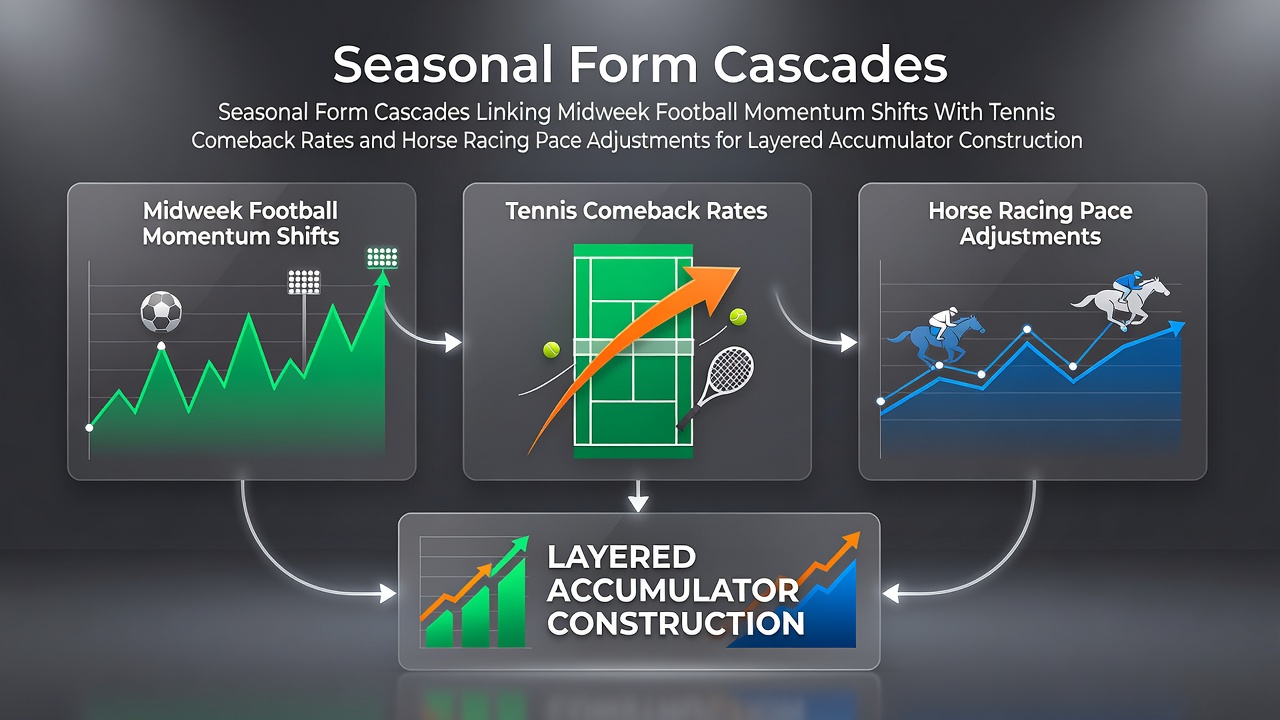
Seasonal Form Cascades: Linking Midweek Football Momentum Shifts With Tennis Comeback Rates and Horse Racing Pace Adjustments for Layered Accumulator Construction
August 2026 marks a transitional window where data from multiple sports shows measurable shifts in performance metrics that align across football, tennis and horse racing; observers tracking these patterns note how midweek league fixtures often produce momentum changes that correlate with elevated comeback percentages in tennis matches and pace recalibrations on the racetrack.
Midweek Football Patterns During Seasonal Transitions
Records compiled by European football federations indicate that teams playing midweek fixtures in early August frequently exhibit altered goal differentials in the second half compared with their June and July averages, while the same squads display different pressing intensities once the calendar moves into September. These adjustments coincide with fixture congestion that follows pre-season tours, and analysts examining match logs find higher rates of late substitutions coinciding with tactical resets that influence the following weekend's results.
Tennis Comeback Metrics in Changing Conditions
International Tennis Federation statistics reveal that players who compete on outdoor hard courts during late summer report elevated break-point conversion rates in deciding sets, particularly when matches extend past two hours; the data further shows that those same athletes maintain higher first-serve percentages after recovering from early-set deficits, a trend that strengthens when surface temperatures drop below seasonal norms. Researchers studying challenger-level events note that these recovery patterns become more pronounced once the European swing concludes and North American swing begins.
Horse Racing Pace Adjustments Across Summer Meetings
Form books maintained by racing authorities in Australia and North America document that horses returning from mid-summer breaks adjust their sectional times when moving from firm to good ground, with leaders often recording slower opening quarters while closers improve their final furlong splits. Trainers citing official going reports indicate that these pace realignments become more consistent once August rainfall patterns alter track surfaces, and the same horses show measurable differences in finishing positions when competing seven to ten days later under similar conditions.
Connecting the Three Sports for Accumulator Layers
Statistical models developed by independent research groups combine football midweek goal-timing data with tennis deciding-set recovery percentages and horse racing sectional adjustments to construct multi-leg selections; these models weight each leg according to the strength of observed seasonal correlations rather than isolated form. One documented approach assigns higher multipliers to football sides that recorded second-half improvements the previous midweek, pairs them with tennis players who posted elevated comeback numbers on comparable surfaces, and completes the chain with horses whose recent pace figures align with prevailing track conditions.

Betting operators in regulated markets outside the United Kingdom publish historical payout tables that illustrate how selections built from these cross-referenced metrics have produced varying returns over successive August periods. Industry reports from the Australian Gambling Research Centre highlight that operators incorporating multi-sport timing filters recorded different liability profiles compared with single-sport accumulators during the 2025-2026 season.
Practical Construction Steps Observed in 2026
Analysts following these seasonal cascades begin by isolating football fixtures scheduled between Tuesday and Thursday in the first fortnight of August, then filter for sides whose expected goals in the final twenty minutes exceeded their season average. They next cross-reference tennis schedules for players meeting the same opponents or court conditions within seventy-two hours of those football matches, checking for deciding-set win percentages above established baselines. Finally, they examine racecards for meetings occurring within the same seventy-two-hour window, selecting runners whose recent pace figures match the projected ground conditions. The resulting three-leg structures rely on temporal proximity rather than narrative form stories.
Conclusion
Patterns linking midweek football momentum, tennis comeback rates and horse racing pace adjustments continue to appear in datasets collected through August 2026; operators and researchers examining these correlations present them as observable statistical relationships rather than predictive guarantees, and the same datasets remain available for further examination by those constructing layered selections across the three sports.